Last Updated: October 23, 2026
Quick Summary
What is required for FFL transfers is fundamentally about accountability: the federal firearms licensee verifies your identity, confirms you’re not a prohibited person, documents the transaction for ATF records, and ensures state-specific requirements are met, creating a documented chain of custody.
- You must provide a valid government-issued photo ID and proof of residency dated within the last 90 days.
- Every buyer must complete ATF Form 4473 in person and pass a federal background check through NICS.
- FFL transfer fees vary by dealer and location, so confirm the complete fee structure before ordering.
- Most transfers complete within one to three weeks from order to possession, depending on shipping and background check results.
- State requirements vary significantly and may restrict certain firearm types, so verify legality in your state before ordering.
Table of Contents
- What Is an FFL Transfer and Why It’s Required
- Documents Needed for FFL Transfer
- Form 4473 for Firearm Transfer: What Buyers Must Know
- How Long Does an FFL Transfer Take
- Understanding FFL Transfer Fees
- Federal Versus State Requirements for Transfers
- Step-by-Step FFL Transfer Process for Buyers
- Common Delays, Denials, and Edge Cases
- Frequently Asked Questions
What Is an FFL Transfer and Why It’s Required
An FFL transfer is the legal process of transferring firearm ownership through a federally licensed firearms dealer, and understanding what is required for FFL transfers ensures compliance with all applicable laws.
The Federal Firearms License is issued by the Bureau of Alcohol, Tobacco, Firearms and Explosives (ATF) to qualified individuals and businesses authorized to deal in firearms. A licensed dealer maintains transaction records, conducts background checks, and ensures buyers meet all legal eligibility requirements.
What is required for FFL transfers is fundamentally about accountability. The federal firearms licensee verifies your identity, confirms you’re not a prohibited person, documents the transaction for ATF records, and ensures state-specific requirements are met, creating a documented chain of custody.
Documents Needed for FFL Transfer
Successful completion of an FFL transfer requires specific documentation from both the buyer and the sending dealer.
Beyond identification, you’ll need proof of residency in most cases: a utility bill, lease agreement, mortgage statement, or government correspondence addressed to your current address dated within the last 90 days.
The sending dealer must provide documentation of the firearm, including make, model, caliber, and serial number, which transfers from their records to the receiving dealer’s records, creating a documented chain of ownership.
State-specific documentation may also be required, such as additional forms, permits, or registrations. Your receiving FFL will inform you of any state-specific paperwork needed when you initiate the transfer.
Form 4473 for Firearm Transfer: What Buyers Must Know
Completing the Form Accurately
ATF Form 4473, officially titled “Firearms Transaction Record,” is the federal document every firearm transfer must include. It captures your personal information, confirms your eligibility to possess a firearm, and documents the transaction for ATF records and the dealer’s permanent files.
When you arrive at your receiving FFL, you’ll fill out Form 4473 in person. It asks for your full legal name, address, date of birth, place of birth, physical description, and citizenship status, and confirms you’re not a prohibited person under federal law.
The form includes yes-or-no questions about your criminal history, mental health adjudications, restraining orders, and other disqualifying factors, designed to identify prohibited persons before the transaction proceeds.
Federal Background Check Process
Once you complete Form 4473, the receiving FFL initiates a background check through the National Instant Criminal Background Check System (NICS). Operated by the FBI, it cross-references your information against multiple databases to determine eligibility.
The NICS check examines federal and state criminal records, mental health adjudications, domestic violence convictions, restraining orders, and other disqualifying factors.
Most transfers clear the NICS check the same day, allowing you to complete the transaction and take possession on the spot. Delays do happen, particularly if your name is common or your background requires additional review.
How Long Does an FFL Transfer Take
The timeline for an FFL transfer depends on how quickly the sending dealer ships, how fast your receiving FFL processes the arrival, and whether the background check clears without delay. In the best case, a transfer completes in three to five business days.
After you order through an online retailer like FAFO TACTICAL, the sending dealer typically ships within one to two business days, and shipping takes three to seven business days depending on carrier and location. Once the firearm arrives, your receiving FFL must verify the shipment, inspect the firearm, and enter it into their records before the transfer begins.
The in-person transfer, Form 4473, NICS check, and paperwork, usually takes 30 minutes to two hours, though some dealers require an appointment that can add several days. The NICS check typically returns a result within minutes, but a “delay” can extend the process to three business days while the FBI investigates.
From order to possession, expect one to three weeks in most cases. Shipping delays, weekend closures at the receiving FFL, or a NICS delay can push it toward four weeks or longer. When ordering through FAFO TACTICAL, our integrated FFL scheduling service coordinates with your receiving dealer to keep you informed of your transfer status.
Understanding FFL Transfer Fees
Every FFL transfer involves a fee charged by the receiving dealer, compensating them for time, paperwork, background check processing, and record-keeping.
Fees vary based on dealer volume, overhead, and local market conditions: high-volume urban dealers may charge less due to economies of scale, while rural independent dealers may charge more.
Beyond the FFL fee, some online retailers charge a handling fee, and some dealers charge for expedited processing or special handling of NFA items like suppressors or short-barreled rifles.
NICS background check fees, if charged separately, are typically minimal, often just a few dollars, and some dealers absorb them into their FFL fee.
Call your receiving FFL before placing an order online to confirm their transfer fee and any additional charges. This prevents surprises and helps you budget accurately for your purchase.
Federal Versus State Requirements for Transfers
State requirements vary significantly. Some states impose additional background check layers beyond NICS, require permits before possession (or only for certain types like handguns), or mandate waiting periods between approval and taking physical possession.
Some states maintain firearm registries requiring dealers to report transfers to state authorities; others prohibit registration entirely. Some restrict certain semi-automatic rifles, magazines above a certain capacity, or other regulated designs, prohibited in your state even if legal federally.
Understanding your state’s requirements before ordering is essential: a firearm legal federally may be illegal in your state, making the transfer impossible. Your receiving FFL will refuse to complete a transfer if the firearm doesn’t comply with state law.
Never assume a firearm is legal in your state just because it’s available for sale online. State restrictions on firearm types, magazine capacity, and features are strict. Verify legality with your receiving FFL or your state’s firearms authority before placing an order.
Step-by-Step FFL Transfer Process for Buyers
Before You Order
The transfer process begins before you make your purchase. First, identify a receiving FFL in your area, a licensed dealer willing to accept transfers and complete the paperwork for you.
Once you’ve identified your receiving FFL, contact them to get their FFL number and dealer information.
Before ordering, verify that the specific firearm you want is legal in your state. Check your state’s firearms laws or ask your receiving FFL directly. Some states prohibit certain models, features, or magazine capacities.
After Purchase: Working With Your Receiving Dealer
After you place your order and the sending dealer ships the firearm, contact your receiving FFL to notify them of the incoming transfer. Provide the tracking number and estimated delivery date so they can prepare to receive and log the shipment.
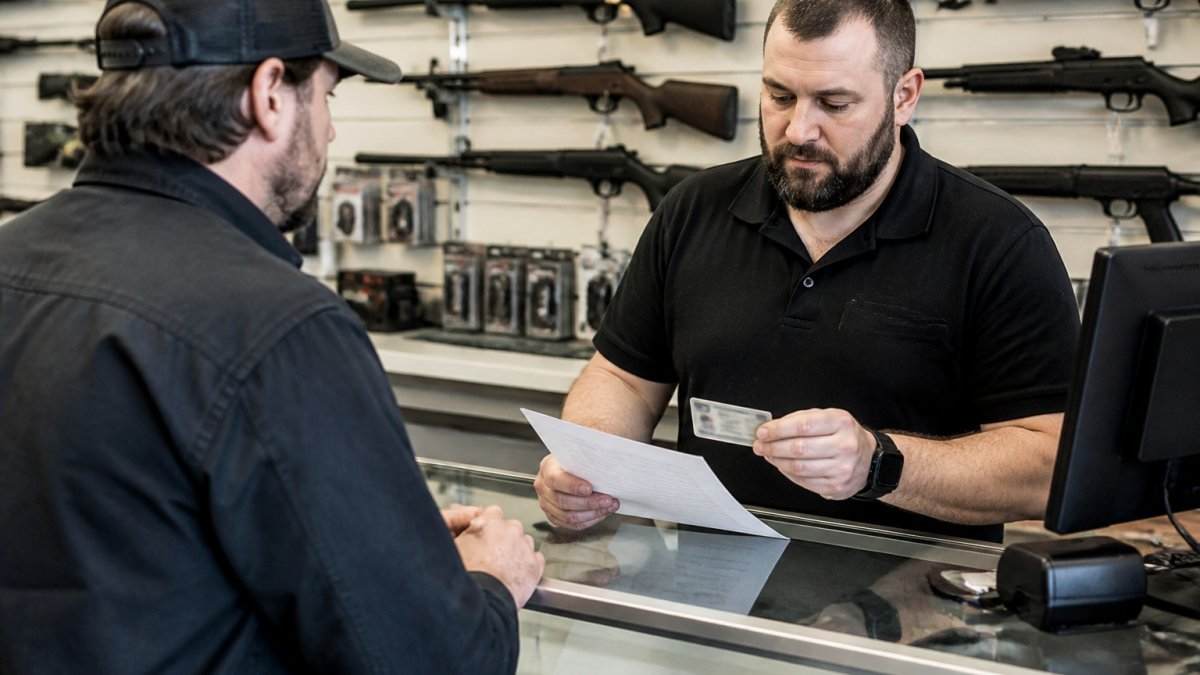
At this point, the receiving FFL will contact you to schedule an appointment to complete the transfer paperwork. During this appointment, you’ll bring your government-issued photo ID and proof of residency.
After Form 4473 is completed, the receiving FFL initiates the NICS background check. In most cases, the check clears within minutes, and the dealer will inform you of the approval.
Pickup and Completion
Once the background check clears, the transfer is complete. You can take possession of the firearm immediately, subject to any state-specific waiting periods.
Before leaving the dealer, confirm you understand all post-transfer requirements in your state. Some states require you to register the firearm with state authorities within a specific timeframe. Others require permits to be obtained before you take possession.
After taking possession, store the firearm safely and securely. If you purchased ammunition, ensure it’s stored separately and securely as well. Review the manufacturer’s documentation for proper maintenance and operation of your new firearm.
Common Delays, Denials, and Edge Cases
Not every FFL transfer proceeds smoothly. A NICS delay occurs when your background check doesn’t return an immediate result.
A NICS denial means you’ve been determined ineligible to possess a firearm under federal law.
Shipping delays are common. Carriers occasionally lose packages, delay shipments, or require additional documentation.
Some receiving FFLs refuse to accept transfers from certain online retailers, citing concerns about documentation or past issues.
Unclaimed firearms present another edge case.
State-specific restrictions sometimes prevent transfers that are legal federally.
The most common transfer delays stem from NICS investigations, shipping delays, and scheduling conflicts with receiving dealers. Planning ahead and maintaining communication with both the sending and receiving dealers minimizes these issues.
Navigating FFL transfers successfully requires understanding federal requirements, your state’s specific laws, and the practical steps involved.
Frequently Asked Questions
What documents do I need for an FFL transfer?
You’ll need a valid government-issued photo ID, proof of residency (utility bill or lease), and the receipt or confirmation from your online purchase. Your receiving FFL dealer will also need your information to verify your eligibility. Some dealers request additional documentation, so contact them before arrival. The sending dealer handles most paperwork on their end, including verifying their Federal Firearms License and preparing shipment documentation.
Do I need to complete Form 4473 for an FFL transfer?
Yes. Form 4473 is the federal form required for all firearm transfers through a licensed dealer. You’ll complete it in person at your receiving FFL dealer’s location. The form captures your personal information, confirms your eligibility to own a firearm, and documents the transaction for federal compliance. Your dealer cannot transfer the firearm until this form is completed and the NICS background check clears.
How long does an FFL transfer take?
Most transfers complete within 3 to 7 business days once the firearm arrives at the receiving dealer. Delays occur if the NICS system is backlogged, if your background check requires additional review, or if state law imposes a longer hold period. Contact your receiving dealer for their specific timeline.
What happens if my background check is delayed or denied?
If NICS is delayed, your dealer must wait three business days before releasing the firearm, unless the check clears sooner. If you’re denied, the receiving dealer will not release the firearm. You can request a NICS appeal through the FBI if you believe the denial was in error. Denials typically result from criminal history, domestic violence convictions, or restraining orders, review your eligibility before ordering.
What is an FFL transfer fee and who sets the price?
An FFL transfer fee is the charge your receiving dealer levies for processing the transfer and handling compliance. This fee covers paperwork, background check coordination, and record retention. Each licensed dealer sets their own fee, which varies widely based on location and dealer policy. Contact your receiving FFL dealer directly for their current pricing before completing your purchase online.
Can I transfer a firearm across state lines?
Yes, but federal law requires the transfer to go through a licensed dealer in your state of residence. You cannot receive a firearm in a state where you don’t reside. If you’re buying online, the firearm must ship to an FFL dealer in your home state. Some states impose additional restrictions on firearm types or require state permits. Always verify your state’s specific requirements before ordering.
What if I’m denied a firearm transfer, can I get my money back?
Refund policies depend on the online retailer’s terms and when the denial occurs. Review the retailer’s return and refund policy before ordering. Once a firearm is in the hands of your receiving FFL dealer, contact both the retailer and dealer to clarify responsibility.
What makes someone ineligible for an FFL transfer?
Federal law prohibits firearm possession for anyone convicted of a felony, anyone subject to a domestic violence restraining order, anyone adjudicated mentally incompetent, and anyone dishonorably discharged from the military. State laws may add additional restrictions. The NICS background check identifies these prohibitions. If you have questions about your eligibility, consult an attorney or contact your local law enforcement before attempting to purchase.