Last Updated: October 26, 2026
Quick Summary
The best tactical gear for home defense setups is a layered system built outward from deterrence to medical response, not a single firearm. Start with exterior lighting, reinforced doors, and window locks, then add a handheld flashlight, a trained-with firearm in a quick-access safe, and a trauma-focused first aid kit.
- A home defense gear checklist runs from deterrence and awareness to defensive tools, medical supplies, storage, and training.
- A standard-capacity 9mm magazine typically holds 15-17 rounds in a full-size pistol.
- A handheld light is the better primary tool for home defense, with a weapon-mounted light as a supplement.
- Build a trauma kit around bleeding control, with one tourniquet per trained adult and expiration checks twice a year.
- Dry practice weekly and live fire monthly or quarterly, and run a full household drill quarterly.
Table of Contents
- How We Chose the Best Tactical Gear for Home Defense Setups
- A Layered Home Defense Gear Checklist for Every Household
- Firearms and Defensive Tools: Handguns, Rifles, and Shotguns
- Choosing a Home Defense Flashlight for Low-Light Visibility
- Building a Home First Aid Kit and Medical Supplies
- Home Defense Gear Storage: Safe Access and Accountability
- Training, Maintenance, and Readiness Checks
- Equipping Your Home Defense Setup at FAFO TACTICAL
- Frequently Asked Questions
How We Chose the Best Tactical Gear for Home Defense Setups
Most home defense advice starts with a gun. We don’t. The best tactical gear for home defense setups is a system, where every piece supports the others.
Our selection criteria came down to five things:
- Reliability under stress. Gear that fails when adrenaline spikes is worse than no gear.
- Ready access with controlled storage. A tool you can’t reach safely is a liability.
- Household fit. Apartment, suburban house, and rural property need different setups.
A Layered Home Defense Gear Checklist for Every Household
A home defense gear checklist is a prioritized list that builds outward from deterrence to medical response, so no single tool carries the whole burden. Start with the cheapest, most legally simple layers and work toward tools that demand training and storage discipline.
Here’s the sequence we recommend:
- Deterrence layer: exterior lighting, reinforced door hardware, a security camera or doorbell camera, and window locks.
- Awareness layer: a phone charger at the bedside, a charged flashlight, and a way to call for help without fumbling.
- Defensive tool layer: a firearm you’ve trained with, plus a less-lethal option if your household needs one.
- Medical layer: a trauma-focused first aid kit, not a bandage box.
- Storage layer: a quick-access safe and a consistent place for every item.
- Training layer: recurring practice, maintenance, and a household plan.
The non-firearm-first approach is the gap most gear lists skip. A well-lit entry and a locked door prevent far more incidents than any rifle.
Firearms and Defensive Tools: Handguns, Rifles, and Shotguns
The best defensive firearm for a home is the one you can operate safely under pressure, store responsibly, and shoot accurately at room distance, a training question more than a spec-sheet question. Three categories dominate home defense.
Handguns: the default for ready access
Handguns are the most common choice for home defense because they fit in a quick-access safe, are easy to secure from children and visitors, and can be staged in more than one room.
What to evaluate:
- Action type. Striker-fired pistols are simple and consistent; DA/SA and DAO designs add a heavier first trigger pull some households prefer. Pick one and train on it.
- Capacity and magazines. A standard-capacity 9mm magazine typically holds 15-17 rounds in a full-size pistol. Keep at least two spare magazines loaded and staged with the gun.
- Sights and light mounting. A weapon-mounted light or a handheld light you’ve practiced with is more important than upgraded iron sights for most home defenders.
The tradeoff is real: handguns demand more practice than long guns, and a single point of contact makes them easier to deflect up close. If you’re new to defensive firearms, our guide on how to choose your first home defense handgun covers fit, action type, and storage.
Rifles and pistol-caliber carbines: accuracy and capacity
Rifles and AR-style rifles offer better accuracy, more capacity, and easier recoil management than handguns, and a pistol-caliber carbine (PCC) gives rifle-like handling with softer recoil and cheaper practice ammunition. These suit homeowners with space and a plan for secure storage, a rifle is not a grab-and-go bedside option for most.
What to evaluate:
- Platform and manual of arms. An AR-style rifle in 5.56mm is the most common defensive long gun, with widely available parts, magazines, and training. A 9mm PCC can share ammunition and magazines with a handgun.
- Overall length and storage. A shorter barrel and an adjustable stock make a rifle easier to maneuver in hallways and easier to lock in a safe or case. Measure your storage space before committing.
- Optics. A red-dot sight is the practical choice for home distances; a magnified optic is usually unnecessary indoors.
Shotguns: simple to run, not magic
Shotguns, especially a 12 gauge pump, remain a classic home-defense choice: simple to operate, widely available, and a single trigger press delivers a lot of energy. The catch: recoil is substantial, capacity is limited, and you still have to aim. The spread at indoor distances is far smaller than most people assume.
What to evaluate:
- Gauge and load. 12 gauge is the standard; 20 gauge reduces recoil for smaller-framed shooters. Buckshot is the conventional defensive load; birdshot is not a reliable stopper.
- Action type. Pump-action shotguns are simple and affordable; semi-automatics reduce the chance of a short-stroke under stress but cost more.
- Length and stock. A shorter barrel and an adjustable or youth stock improve maneuverability and fit. A weapon-mounted light matters here as much as on any other platform.
Less-lethal and utility tools
Less-lethal and utility tools belong in this layer too. A tactical pen, a sturdy flashlight that doubles as an impact tool, and a window breaker for escape are reasonable additions. A defensive knife, such as a fixed-blade with a tanto profile and G10 handle, is a backup tool, not a primary plan, and in many jurisdictions it carries its own legal restrictions, so check your state and local rules first.
Match the platform to the household, not to the spec sheet. Apartments and homes with shared walls favor handguns and PCCs with appropriate ammunition; rural properties with more space can justify a rifle; households with smaller or less experienced shooters should weigh 20 gauge and compact 9mm options. Whatever you choose, budget for training and secure storage before you budget for accessories.
Choosing a Home Defense Flashlight for Low-Light Visibility
A home defense flashlight is the single most useful piece of tactical gear most households underinvest in. Most defensive encounters happen in poor light, and you cannot identify a threat you cannot see. The right light activates without thinking and works after months in a drawer.
What to look for
- Output: a few hundred to roughly a thousand lumens covers most indoor needs. Higher isn’t automatically better, too much output in a small room can wash out your vision.
- Switch type: a tail-cap switch with momentary-on is the standard for defensive use, letting you flash and move without leaving the light on continuously. A separate mode switch that skips cycling through strobe to reach constant-on is worth paying for.
- Beam pattern: a balanced beam lights a room without a tunnel-vision hotspot. A tight, long-throw beam is better suited to outdoor use than to hallways and bedrooms.
Handheld vs. weapon-mounted
Handheld lights are more flexible: you can identify a noise without pointing a firearm at it, and carry one whether or not you’re armed.
Most practitioners find a handheld light is the better primary tool for home defense, with a weapon-mounted light as a supplement on a long gun. If you use both, practice switching so you don’t blind yourself or fumble under stress.
A practical three-light setup
A common mistake is buying one flashlight for the whole house. Low-light visibility is a system, not a gadget. A workable baseline:
- Bedside light: a handheld with a tail-cap switch, staged next to your safe and phone charger.
- Entry light: a second handheld near the main entry, so a knock at the door doesn’t send you searching.
- Vehicle or kit light: a compact light in your vehicle and one dedicated to your medical kit.
Keep spare batteries in a labeled bin with your readiness supplies, and test every light monthly. A dead cell discovered during an incident is the same as no light at all.
Practice your light discipline before you need it. Rehearse turning the light on briefly, moving, and turning it off, and rehearse using your handheld light alongside your firearm if you’ve chosen that combination. A light you’ve never activated under stress is just a heavy object in a drawer.
Building a Home First Aid Kit and Medical Supplies
A home first aid kit for defensive preparedness is not the plastic box in your kitchen. It’s a trauma kit built around controlling severe bleeding, the injury most likely to become fatal before help arrives.
Build the kit in two tiers:
Tier 1, everyday kit:
- Nitrile gloves, several pairs
- Gauze rolls and trauma dressings
- Medical tape and shears
Tier 2, household stock:
- Extra tourniquets, one per trained adult
- Chest seals
- Burn dressings
Store the kit where you’d actually reach it during an incident, not in a closet behind boxes. The American Red Cross first aid guidance is a solid baseline for what a household kit should contain and how to refresh it.
Home Defense Gear Storage: Safe Access and Accountability
The best storage setup balances fast access during an emergency with secure control the rest of the time.
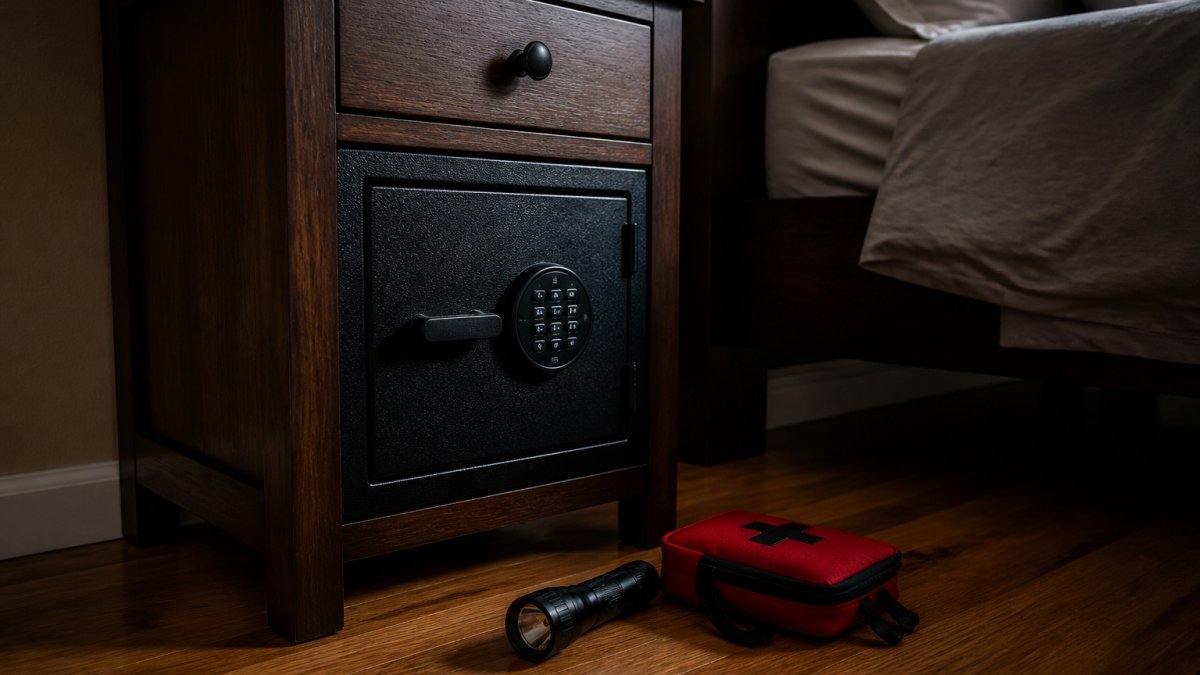
Storage principles that hold up in practice:
- One consistent location per item. Your flashlight, safe, and medical kit should never move.
- Practice the open. A safe you fumble with under stress is a locked box.
- Household accountability. Everyone in the home should know the rules, and firearms should be secured from children and visitors.
Watch out: storing a loaded firearm in an unlocked drawer “for quick access” is the most common storage mistake we see. It trades a small speed gain for a large safety and legal risk.
Training, Maintenance, and Readiness Checks
Gear you haven’t trained with is decoration. Readiness is a habit, and it’s the layer most households skip. A simple routine keeps the whole setup honest.
- Dry practice: weekly, five minutes of drawing from the safe and presenting the firearm safely.
- Live fire: monthly or quarterly, focused on close-range accuracy and safe handling.
- Light discipline: practice using your flashlight and firearm together, including the strobe.
Keep a simple readiness log. A checklist on the inside of a closet door beats a mental note every time.
| Readiness Task | Frequency | What It Catches |
|---|---|---|
| Dry practice from safe | Weekly | Fumbled access, poor grip |
| Live fire session | Monthly to quarterly | Accuracy drift, function issues |
| Flashlight and battery check | Monthly | Dead cells, failed switches |
| Trauma kit inspection | Twice a year | Expired supplies, missing items |
| Full household drill | Quarterly | Broken plan, unclear roles |
Equipping Your Home Defense Setup at FAFO TACTICAL
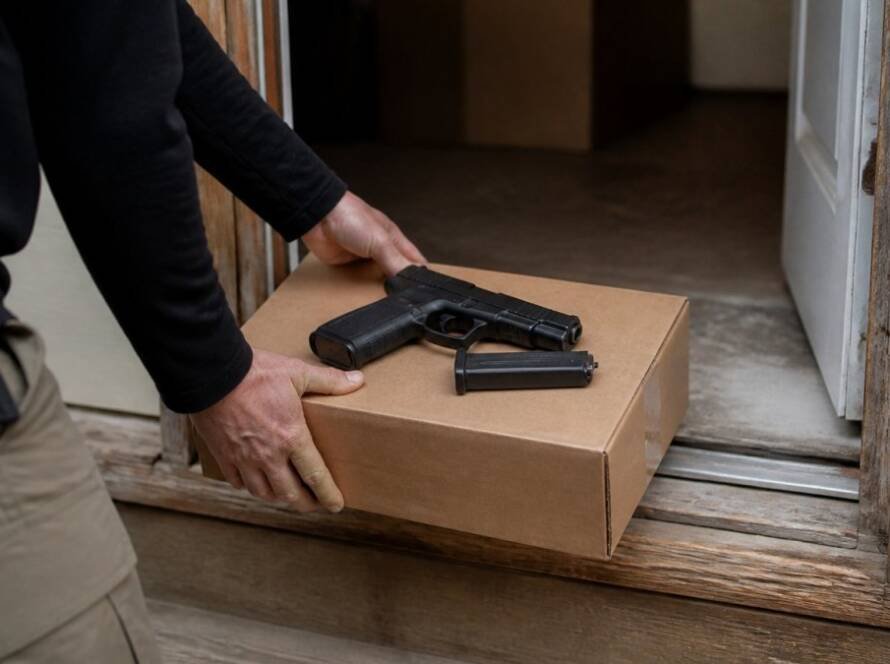
Building the full layered setup is easier when you can source firearms, ammunition, and support gear in one place. If you’re buying online for the first time, our article on whether it’s safe to buy firearms online covers how the process works, and the guide to what is required for FFL transfers explains the steps from order to pickup.
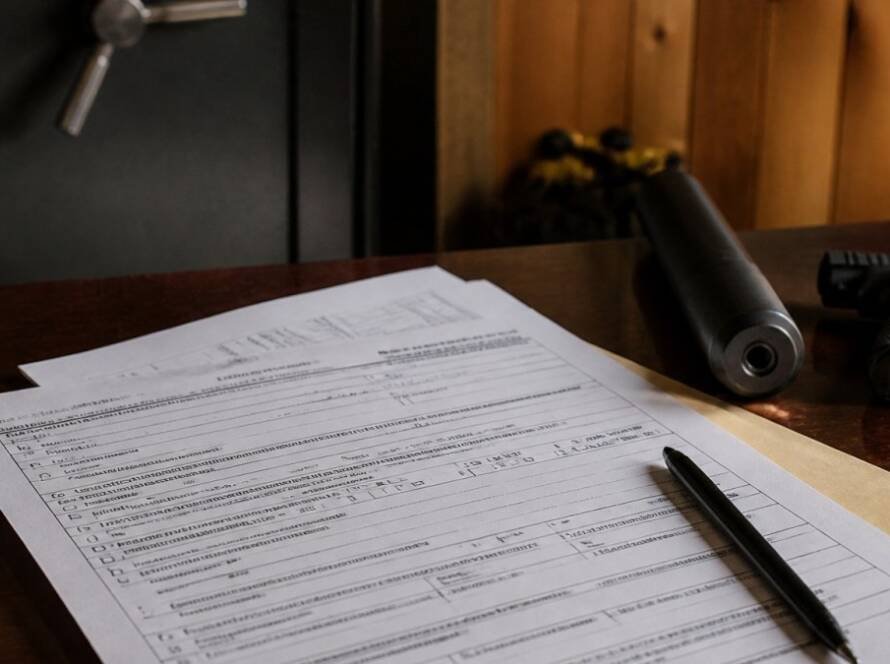
Our integrated FFL transfer scheduling service removes the guesswork, and we help first-time buyers work through NFA paperwork rather than leaving them to figure it alone. Inventory accuracy and honest order updates matter, because a defensive setup is only as good as the gear that actually arrives.
Frequently Asked Questions
What gear should be included in a home defense setup?
A practical home defense setup starts with a reliable firearm you have trained with, a home defense flashlight rated for low-light visibility, a home first aid kit, and secure home defense gear storage. Add a layered plan that includes door reinforcement, lighting, and communication with household members. Non-firearm tools such as a tactical pen or window breaker can round out the kit. Build the checklist around your household’s layout and skill level rather than buying everything at once.
What is the best flashlight for home defense?
Look for a handheld or weapon-mounted light with 500 to 1,000 lumens, a momentary switch, and a strobe feature for disorienting an intruder. A home defense flashlight should be easy to grab from your bedside setup and have a beam bright enough to identify threats without washing out your own vision. Rechargeable models reduce battery waste, but keep spare batteries on hand. Test the light in your home at night before relying on it.
How should home defense gear be stored safely?
Store firearms in a locked safe or quick-access lockbox that only authorized adults can open. Keep ammunition separate when children or unauthorized visitors are present, and mount safes so they cannot be carried off. Flashlights, medical kits, and other defensive equipment should live in fixed, known locations so you can reach them in the dark. Review your home defense gear storage monthly to confirm locks work and nothing has been moved.
How often should I check or replace emergency supplies?
Inspect your home first aid kit every three to six months and replace expired bandages, medications, and sterile items. Check flashlight batteries monthly and swap them before they fail. Firearms should be cleaned and function-checked after every range session, and at least quarterly if stored long-term. Run a full readiness check on your home defense gear checklist twice a year, including safe locks, medical supplies, and communication plans.
Your home defense plan is only as strong as its weakest layer, and most households have a gap they haven’t noticed yet. Whether you’re starting with a flashlight and a trauma kit or adding a firearm to a setup you’ve already built, FAFO TACTICAL can help you source the right gear and navigate the FFL transfer and NFA process without the runaround. Get started with FAFO TACTICAL and build a home defense setup you can actually trust.