Quick Summary
Durable tactical gear for professional use is judged by construction more than fabric weight. Look for reinforced load-bearing seams, hardware rated for its load, coatings you can verify, and parts you can repair or replace. Matching the specification to how often you wear the gear matters as much as the materials.
- Heavy fabric with weak stitching usually fails at the seams first.
- Bonded synthetic thread generally resists abrasion and UV better than unbonded thread.
- Higher denier means more abrasion resistance but also more weight and less breathability.
- Inspect load-bearing seams and stress points after every heavy use.
- Repair localized damage; replace gear when the damage is structural.
Table of Contents
- Last Updated: November 2, 2026
- What Makes Tactical Gear Durable Enough for Professional Use
- Materials and Construction: What to Look for in Tactical Gear
- Best Tactical Gear for Law Enforcement and Security Roles
- Building a Tactical Gear Loadout Checklist
- Fit, Load Management and Ergonomics in Daily Use
- Tactical Gear Maintenance Tips That Extend Service Life
- Choosing Your Professional Gear Through FAFO Tactical
- Frequently Asked Questions
Last Updated: November 2, 2026
Last Updated: November 2, 2026
A common question from professionals is which durable tactical gear for professional use will still work after a year of daily wear? Gear that fails in the field costs more than the purchase price. It costs time, reliability and sometimes safety. This guide walks through what makes equipment hold up, which materials and construction details to check, and how to build a practical loadout.
Tactical gear is any equipment designed for demanding use, from load-bearing vests and duty belts to field footwear and carry bags. Professional use puts more strain on that gear than casual use does. Hours of wear, repeated loading and exposure to weather all test construction. The goal here is to help you judge that construction before you buy.
What Makes Tactical Gear Durable Enough for Professional Use
Durable gear is defined less by a marketing label and more by how it is built and how it is tested. Look for reinforced stress points, stitching that is double or triple-stitched at load bearing seams, and hardware rated for the loads it will carry. A common mistake is judging durability by fabric weight alone. Heavy fabric with weak stitching fails at the seams first.
Professional buyers should also ask how gear is used. A vest worn for twelve hours a day faces different wear than a backpack used twice a month. Match the specification to the demand.
Materials and Construction: What to Look for in Tactical Gear
Materials determine how gear handles abrasion, moisture and temperature, but the specification sheet only tells you part of the story. The rest is construction: how fabric is cut, how seams are joined, how hardware is attached and whether the item can be repaired instead of replaced.
Fabric and coating basics
Most professional load-bearing gear uses nylon or polyester woven fabric, often measured in denier (the weight of the yarn). A higher denier generally means a heavier, more abrasion-resistant fabric, but it also means more weight and less breathability. Common patterns are 500D and 1000D nylon for packs and vests, with lighter 210D to 400D fabrics used where weight matters more than abrasion resistance. Coated fabrics, polyurethane (PU) or polyvinyl chloride (PVC), add water resistance, but coatings can crack, peel or stiffen with age, so check how the coating is applied and whether the manufacturer describes it as waterproof or only water-resistant.
Stitching and seams
Stitching is often where gear fails first. Look for reinforced seams at load-bearing joints and strap attachments, and check the thread type, since bonded synthetic thread generally resists abrasion and UV degradation better than unbonded thread. A common pattern is heavy fabric joined with light stitching, the fabric survives while the seam pulls out.
Hardware and stress points
Buckles, clips, D-rings and zippers should be rated for the loads they will carry. Metal hardware should resist corrosion if the gear will see moisture, sweat or salt air. Stress points, where straps meet the body, where handles attach, where zippers end, should be reinforced with extra fabric, bartacks or rivets. Ask how the hardware is attached: sewn, riveted or both.
Repairability
A durable item is one you can fix. Modular webbing lets you replace pouches without replacing the carrier, and replaceable or serviceable components extend service life. Before buying, ask whether the manufacturer sells replacement parts. Gear that cannot be repaired becomes disposable regardless of how strong the fabric is.
Watch out: a high denier number on the product page does not guarantee durability if the seams, hardware or coating are weak, check the whole construction, not just the fabric spec.
Best Tactical Gear for Law Enforcement and Security Roles
Law enforcement and security personnel have specific requirements. Readers weighing gear for a home defense setup can compare related picks in home defense tactical gear picks. Gear must allow quick access, carry required equipment safely and remain comfortable across long shifts. Fit and adjustability matter as much as durability.
Load-Bearing Vests and Duty Belts
A load-bearing vest distributes weight across the torso. Check the adjustability of shoulder and waist straps, the number and placement of attachment points, and how the vest sits when seated. A duty belt should carry its weight on the hips rather than the shoulders. Confirm the belt’s rigidity and the security of its retention system.
Footwear and Field Clothing
Footwear is one of the most important purchases for professional use. Look for sole durability, ankle support, water resistance and a fit that allows for extended wear. Field clothing should offer abrasion resistance at knees and seat, breathability for changing conditions and pockets placed where you can reach them without shifting your load.
Building a Tactical Gear Loadout Checklist
A loadout is the set of equipment you carry for a specific role. If your checklist includes a firearm, see how to choose your first home defense handgun for guidance on that decision. Build yours around the tasks you perform, not around a list of popular products.
- Identify your core tasks and the equipment each one requires
- Separate essential items from situational ones
- Confirm each item’s weight and how it distributes across your body
- Check that attachment points do not conflict with one another
- Test the full loadout in realistic movement before relying on it
- Review the loadout after each training cycle or shift change
Keeping a written checklist helps you verify the setup before every deployment.
Fit, Load Management and Ergonomics in Daily Use
Fit determines whether gear remains usable over a full shift. Start with adjustability. Gear should accommodate changes in body size, layers of clothing and different body armor configurations. Load management is equally important. Heavy items should sit close to the body and centered on the torso. Spread weight across hips and shoulders rather than concentrating it in one place.
Ergonomics also affects safety. Gear that restricts reach, obstructs vision or shifts during movement creates risk. Test every item with the motions your job requires, including bending, climbing and running where applicable.
Tactical Gear Maintenance Tips That Extend Service Life
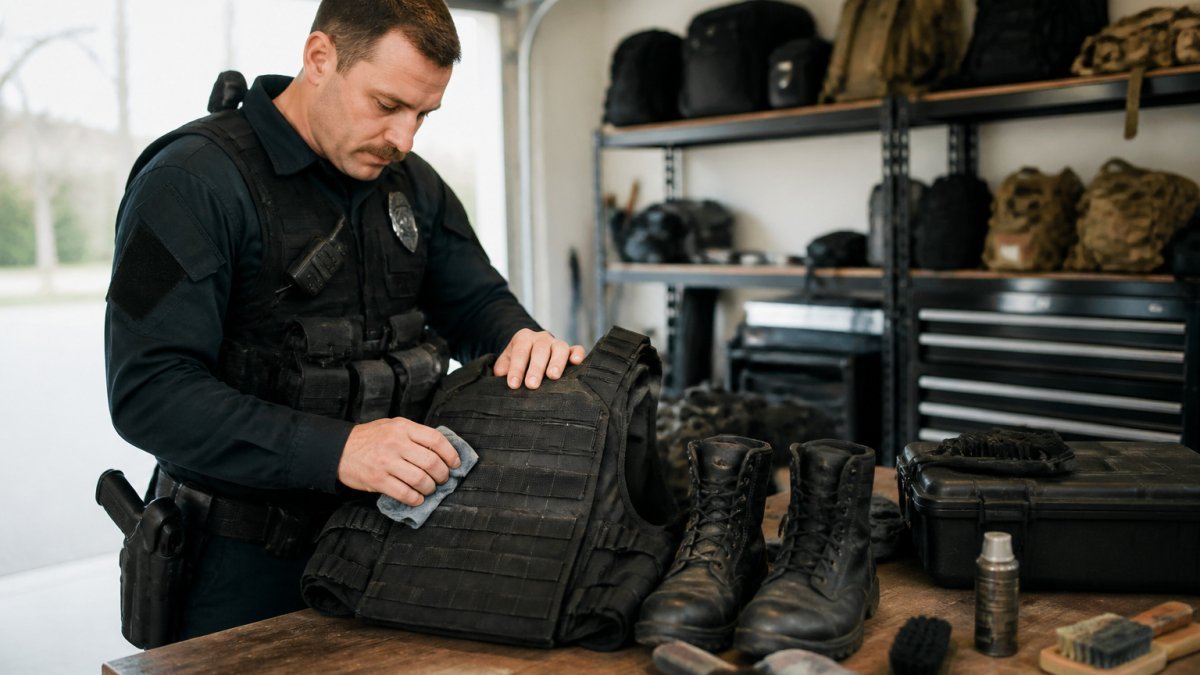
Maintenance is where many buyers lose the value of a durable purchase. The goal is not to baby the gear but to catch wear before it becomes a failure and to know when replacement is cheaper than repair. A simple lifecycle approach, inspect, clean, repair, replace, and track cost per use, turns gear purchases into a managed expense instead of a recurring surprise.
Inspection intervals and what to check
Inspect gear after every heavy use and on a scheduled basis (for example, weekly for daily-wear items and monthly for stored equipment). Check stitching at load-bearing seams, webbing for fraying or UV fading, buckles and clips for cracks or deformation, zippers for missing teeth, and coatings for cracking or peeling. Pay particular attention to stress points: strap attachments, handle roots, and the ends of zippers. A small fray caught early is a repair; the same fray after a season of use is a replacement.
Cleaning by material
Follow the manufacturer’s instructions first. In general, remove grit and dust with a soft brush or compressed air, wipe down hardware, and hand-wash fabric with mild soap and water rather than harsh detergents or solvents that can degrade coatings and thread. Rinse thoroughly and air dry fully before storage. Do not machine-dry coated fabrics or place them near direct heat, which can crack coatings and weaken synthetic fibers.
Storage and environment
Store gear dry, away from direct sunlight, and in a way that does not compress or crease coated fabrics or load-bearing webbing. UV exposure degrades many synthetic fabrics and coatings over time, so avoid leaving gear in a vehicle or exposed to sun for long periods. Humidity and salt air accelerate corrosion on metal hardware, so dry and wipe hardware after exposure.
Repair versus replace
Repair is usually the better choice when the damage is localized: a worn strap, a broken buckle, a failed zipper slider, or a small tear in a non-load-bearing panel. Replacement makes more sense when the damage is structural, multiple failed seams, widespread coating failure, or hardware that cannot be sourced. Keep a small repair kit (spare buckles, cord, needle and heavy thread, patch material) and know which items the manufacturer supports with replacement parts.
Cost per use and lifecycle planning
Track the purchase price and the service life of each item to estimate cost per use. A higher-priced item that lasts much longer can cost less per use than a cheaper item that fails quickly. Keep a simple maintenance log for each piece of gear: purchase date, inspections, repairs, and replacement date. Over time, the log shows which items are worth buying at a higher price and which are not.
Watch out: replacing gear on a fixed schedule without inspecting it can waste money, and running gear until it fails can cost more in downtime and safety than an early replacement, let inspection results, not the calendar alone, drive the decision.
The article’s maintenance guidance can be scanned quickly by inspection area, what to look for, and how often to check.
| Area | What to check | Interval |
|---|---|---|
| Load-bearing seams | Stitching and stress points | After heavy use |
| Webbing | Fraying or UV fading | Weekly for daily-wear items |
| Buckles and clips | Cracks or deformation | Weekly for daily-wear items |
| Zippers | Missing teeth | Weekly for daily-wear items |
| Coatings | Cracking or peeling | Monthly for stored equipment |
| Hardware | Moisture or salt exposure | After exposure |
Choosing Your Professional Gear Through FAFO Tactical
Selecting durable gear comes down to matching construction, materials and fit to your actual role. Start with your loadout checklist, verify the specifications behind each item and test fit before committing. Gear built for professional use costs more up front, but it reduces replacement cycles and keeps you reliable when it counts.
To see current options and availability for tactical gear, visit the FAFO TACTICAL website for product details. Pricing depends on the specific item, quantity and delivery details, so check the site or request a quote directly for the most accurate figures.
Frequently Asked Questions
What defines professional-grade tactical gear?
Professional-grade tactical gear is built to withstand daily use, repeated loading and harsh conditions without losing function. Look for reinforced stitching, abrasion-resistant fabrics such as high-denier nylon, corrosion-resistant hardware and documented load ratings. Gear used for duty or security work should also fit consistently over long shifts and survive frequent cleaning. Pricing varies by specification, so compare the construction details rather than the label alone. For current prices and available models, check FAFO Tactical’s website or request a quote.
How do I choose durable tactical gear for daily use?
Start with the daily load: how much weight you carry, how long you wear the gear and what environments you work in. Prioritize materials and construction over brand claims, including seam reinforcement, buckle and zipper quality, and modular attachment points that stay secure under movement. Test fit with the full loadout before committing. Gear that is comfortable for a short walk may chafe or shift during a twelve-hour shift, so evaluate it under realistic conditions.
What maintenance keeps tactical gear in service longer?
Clean fabric gear after exposure to mud, salt or sweat, and let it air dry away from direct heat. Inspect stitching, webbing and hook-and-loop fasteners regularly, and replace worn components before they fail under load. Store gear dry and out of direct sunlight to prevent fabric degradation and corrosion. Keeping a simple inspection log helps you track wear over time and plan replacements before a critical moment.
Is military-spec gear better for professional use?
Military specifications describe testing and performance requirements, but they do not automatically mean a product suits every professional role. Compare the actual specifications, including materials, load ratings and construction methods, against the demands of your job. Civilian-grade gear built to equivalent standards can perform well for many applications. Verify claims against documented testing rather than marketing language.